
What is pallet netwrap used for?
Pallet netwrap, also known as netted pallet wrap, stretches over palletized loads to stabilize boxes, bags, or crates during storage and transport, replacing or supplementing shrink wrap and strapping.

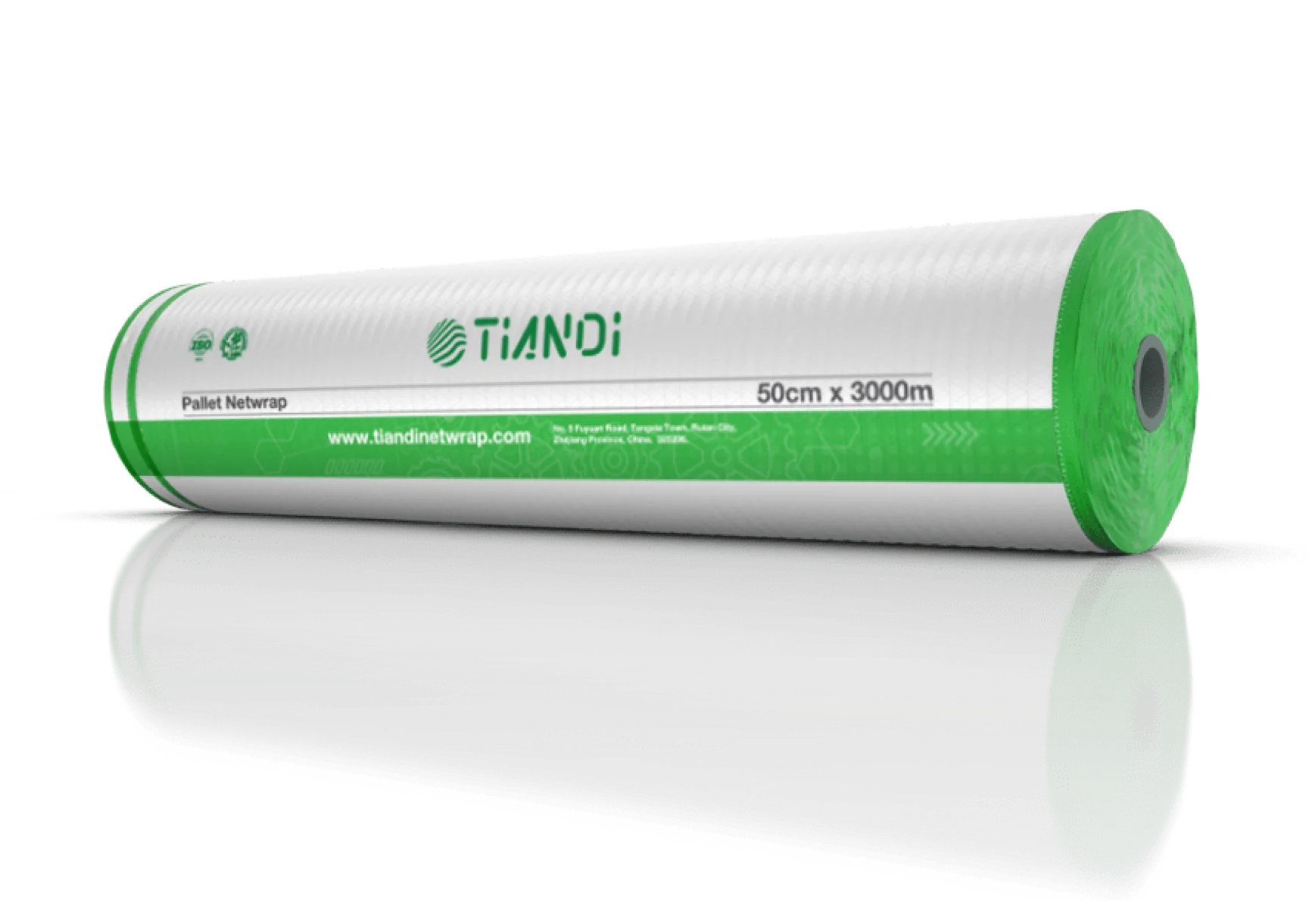
Choose open-weave HDPE pallet netting when a load needs containment and airflow. Match elastic or non-elastic construction, width and roll length to the pallet shape, wrapping line and storage conditions.
Why Use Open-Weave Pallet Net Wrap?
Choose the containment performance your load needs while keeping the packaging line easy to inspect and adjust. Tiandi supports wholesale, OEM and custom supply programs.
Pallet Netting Wrap Options
Compare the main pallet netting wrap formats, then follow the product or guide link that best matches your load and packaging program.
Elastic pallet net wrap stretches around uneven loads and recovers to maintain containment during transit.
View pallet net wrapOpen-weave pallet wrap for products that need ventilation, moisture release or visual inspection.
Read the breathable wrap guideDiscuss a repeat-use load-cover specification with our team when your operation needs a custom packaging format.
Discuss a custom solutionNon-elastic netting is available for rigid, uniform loads that need fixed containment without recovery.
Compare product specificationsPallet Wrap Comparison
Pallet netting wrap is designed for containment and airflow. Solid film remains useful when a load needs a sealed barrier against dust or outside moisture.
| Product | Airflow | Visibility | Best suited for |
|---|---|---|---|
| Pallet netting wrap | High | High | Ventilated loads and fast identification |
| Stretch film | Low | Medium | Dust, moisture and full-load sealing |
| Reusable pallet cover | High | Medium | Long-term repeat-use packaging programs |
How to Choose the Right Pallet Wrap Netting
The right pallet wrap netting depends on more than the keyword used to describe it. Share your pallet dimensions, load weight and wrapper setup so the specification can be matched to the application.
Pallet Netting Wrap Applications
From warehouses and logistics to agricultural, food and industrial packaging, pallet net wrap supports loads that need stable containment, airflow and practical handling.
Available width and roll combinations.
| Width | Length | Wt/Rl | Rls/Plt |
|---|---|---|---|
| 50cm (20") | 1000m | 4.06kg | 96 |
| 50cm (20") | 3000m | 12.19kg | 40 |
| 76cm (30") | 3000m | 18.29kg | 52 |
Pallet netwrap, also known as netted pallet wrap, stretches over palletized loads to stabilize boxes, bags, or crates during storage and transport, replacing or supplementing shrink wrap and strapping.
Open weave pallet netting is the wide, air-permeable mesh structure used in Tiandi's pallet net wrap. Unlike a solid stretch film, the open weave lets air and moisture escape while still applying even compression across the load.
Pallet netting stretch wrap uses a knitted HDPE net instead of a solid plastic film. It uses far less material per pallet, stretches to conform to irregular loads like sacks or crates, and — because it's open weave — avoids trapping condensation against ventilated goods the way solid film can.
Yes. Palletisation nets is the term used across the UK and much of Europe for what North American buyers call pallet net wrap or pallet netting. It is the same knitted HDPE mesh applied to a palletised load — only the vocabulary differs, not the product.
A pallet mesh film is not a film at all — it is a knitted open net, so air and moisture pass through instead of being sealed against the goods. Buyers searching for mesh stretch film are usually after exactly that: the containment of a stretch wrap without the condensation a solid sheet traps on ventilated loads.
For most bagged, crated and ventilated loads, yes. Net wrap runs on standard turntable and rotary-arm wrappers once the film carriage is set for the net width and pre-stretch is reduced, and it typically secures a load in three to five passes instead of the fifteen to twenty a film wrapper needs. Stretch film remains the better tool where the load must be sealed against outside dust or moisture.
It's made from high-strength HDPE, giving it good tear resistance and load-bearing capacity for demanding logistics environments.
Elastic netting stretches and recovers, so it keeps applying inward force and suits loads that settle or shift in transit. Non-elastic netting holds the dimension it is applied at, which suits rigid, uniform loads where you want containment without ongoing compression. Tiandi supplies both, so you can match containment force to your load type.
In practice buyers use both terms for the same product. Tiandi's pallet netting is knitted — HDPE strands are interlooped on a Raschel machine, the same principle used for baler net wrap — which is what gives the net its dimensional stability and tear resistance.
Extruded netting is formed by extruding and stretching a polymer sheet into a grid, so the junctions are fused. Knitted netting interloops separate strands instead, which generally handles point loads and snags better and conforms more readily to irregular stacks. Tiandi manufactures knitted netting only — we do not supply extruded net.
Standard options include 50cm and 76cm widths with 1000m and 3000m roll lengths, and custom widths and lengths can be arranged.
Yes. Width, roll length, elasticity, and packaging format can all be tailored — contact our team with your pallet dimensions and load weight for a specific recommendation.
Yes. Tiandi can discuss recurring wholesale supply, export packaging, private-label or OEM requirements, custom roll specifications and packaging-line fit. Send your pallet dimensions, load type, target volume and current wrapper details for a quotation.