

Open Weave Pallet Netting Explained: How It Works and When to Use It
Open weave pallet netting looks nothing like plastic stretch film, and that's the point. Here's what the weave actually does for your load.
August 7, 2026
"Open weave" shows up in a lot of pallet netting listings — and in UK and European catalogues as palletisation nets — but it's not just a marketing phrase — it describes the actual knitted structure of the net and why it behaves the way it does on a pallet. Here's what the weave is, how it's made, and when it's the right call over a solid wrap.
What 'open weave' actually means
Pallet net wrap, sold as palletisation nets across much of Europe, is produced by knitting HDPE filaments into a wide, diamond-pattern mesh rather than extruding a solid sheet. The gaps between filaments — the 'open' part of open weave — are large enough to see through and let air pass, while the knit itself carries the tension needed to hold a load together. That combination of visible gaps and structural strength is what separates open weave netting from both plastic film and tighter-knit fabrics.
Woven or knitted? A note on terminology
Buyers often search for "woven pallet netting", and it's worth clearing up what that means. Strictly, woven fabrics interlace warp and weft yarns at right angles, which produces a stable structure with almost no stretch — think woven polypropylene sacks. Pallet netting is knitted: the filaments are looped through one another, which is what gives the mesh its elasticity and recovery. Almost everything sold as woven pallet netting is in fact knitted, because a truly woven net could not stretch enough to generate containment force on a load. Non-elastic netting exists for heavy, rigid goods, but even that is knitted rather than woven.
Why the open structure matters on a pallet
When netting is stretched over a stacked load, the open weave lets air move freely through the pallet instead of sealing it. For dry, uniform cartons that barely matters. For anything that releases moisture — freshly packed goods, damp bags, or produce — it matters a lot, because trapped humidity under a sealed wrap is what leads to condensation, mold, and spoilage claims after transport.
Elastic vs. non-elastic open weave netting
Open weave pallet netting comes in elastic and non-elastic versions. Elastic netting stretches around the load and holds it under continuous tension, which is useful for uneven or mixed-SKU pallets where the shape isn't a clean rectangle. Non-elastic netting applies a fixed containment force without ongoing stretch — a better fit for rigid, uniform loads where you want consistent pressure without the net continuing to tighten over time.
How much netting a pallet actually needs
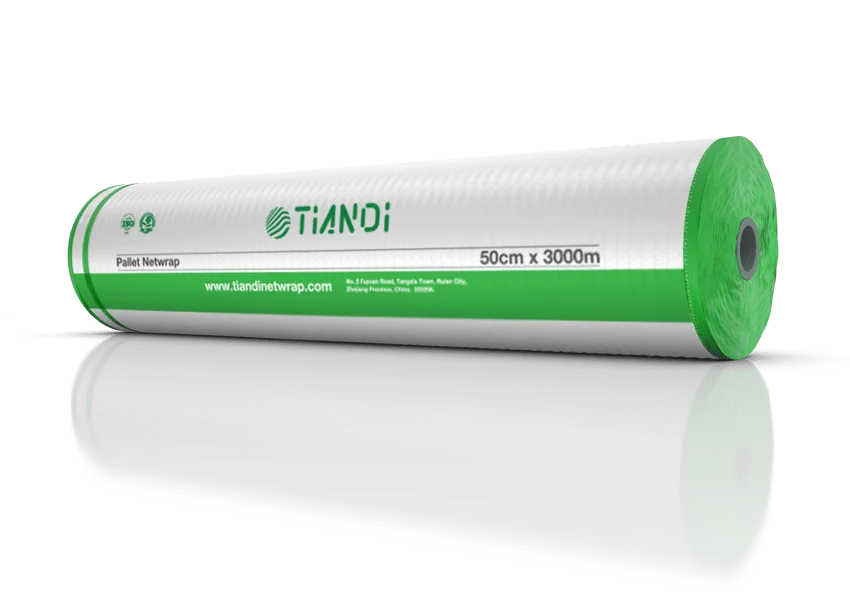
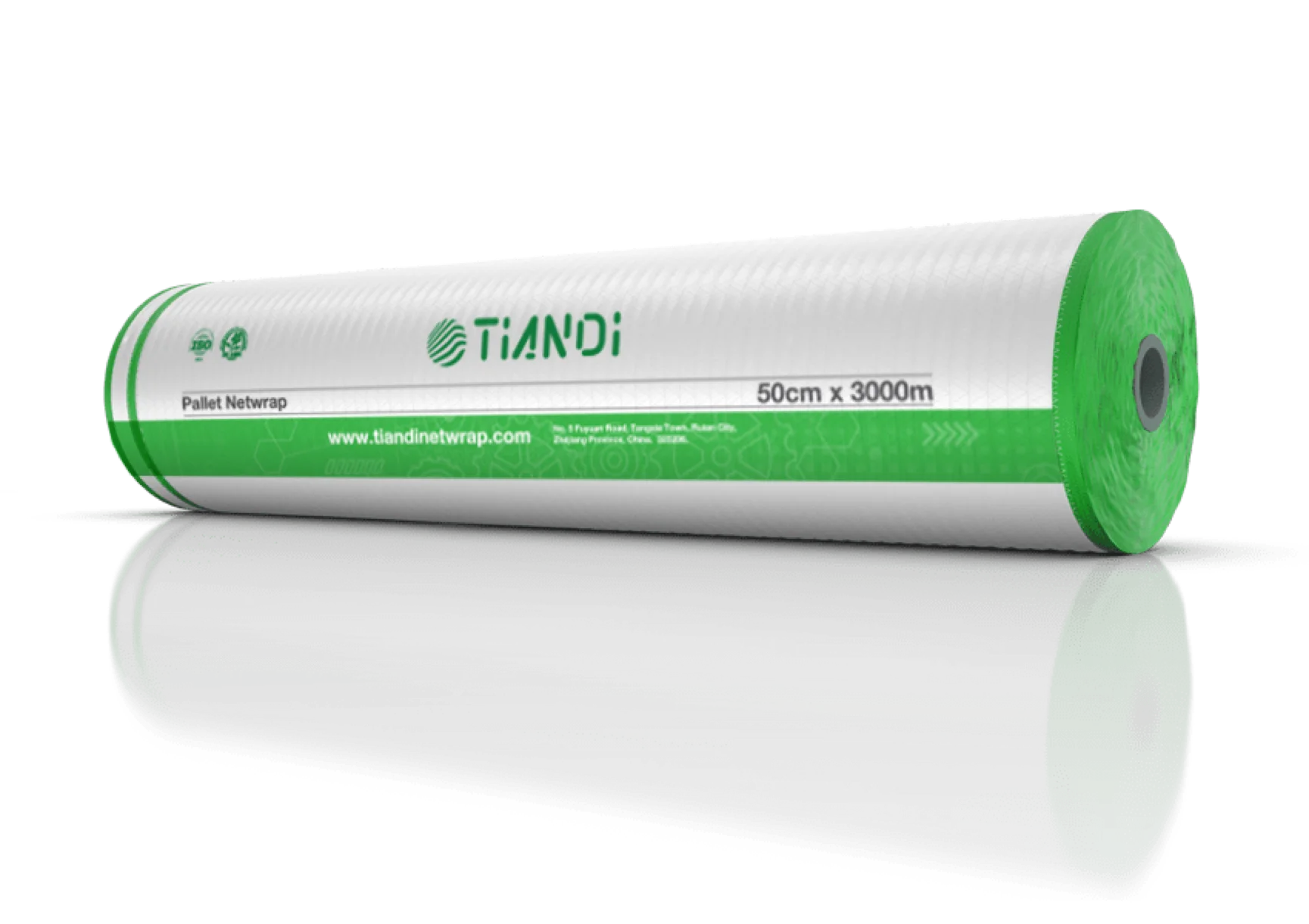
Coverage depends on load height and how much containment force the goods need, not just roll width. As a starting point, Tiandi's standard pallet netwrap runs 50cm and 76cm widths on 1,000m and 3,000m rolls — the narrower width suits shorter or lighter stacks, while 76cm gives fuller coverage on taller pallets in fewer passes. Custom widths and lengths are available for pallet sizes or load heights outside that range.
When to choose netted pallet wrap over film or strapping
- Load needs airflow to avoid trapped moisture
- Load shape is irregular, bagged, or mixed-SKU
- You want fewer passes and less material per pallet than film requires
- Strapping alone risks cutting into soft or bagged goods
Bottom line
Open weave pallet netting isn't a premium version of stretch film — it's a different tool for loads that need to breathe while still being held together. If your product is ventilated, irregular, or bagged, it's usually the better starting point; contact our team with your pallet dimensions and load type and we'll recommend elastic or non-elastic netting and the right width.
For standard widths and roll lengths, see the Tiandi pallet netwrap specifications before requesting a quote.
Frequently Asked Questions
- What is open weave pallet netting?
- Open weave pallet netting is a knitted HDPE mesh used to stabilize palletized loads. The filaments are knitted into a wide diamond pattern with gaps large enough to see through, so air and moisture pass freely while the knit still carries the tension needed to hold the load together.
- Is woven pallet netting the same as open weave pallet netting?
- In everyday use, yes — buyers use the terms interchangeably. Technically the material is knitted rather than woven: woven fabrics interlace warp and weft yarns and barely stretch, while knitted netting loops filaments together so the mesh can stretch and recover. That elasticity is what generates containment force on a pallet.
- How is open weave netting different from stretch film for pallet wrapping?
- Stretch film is a solid LLDPE sheet applied in fifteen to twenty overlapping layers, sealing the load. Open weave netting is a knitted mesh applied in three to five passes that lets the load breathe. Netting uses far less plastic per pallet; film gives a dust and moisture barrier that netting cannot.
- Should I choose elastic or non-elastic open weave netting?
- Elastic netting suits uneven or mixed-SKU pallets, because it stretches around an irregular shape and holds it under continuous tension. Non-elastic netting suits rigid, uniform loads where you want a fixed containment force without the net continuing to tighten.
- What widths does Tiandi pallet netting come in?
- Standard pallet netwrap runs 50cm and 76cm widths on 1,000m and 3,000m rolls. The narrower width suits shorter or lighter stacks; 76cm gives fuller coverage on taller pallets in fewer passes. Custom widths and lengths are available for pallet sizes outside that range.