
How to Choose a Pallet Net Wrap Supplier
Choose a pallet net wrap supplier by checking material, roll consistency, machine fit, customization, MOQ, export packaging and quality control.
September 11, 2026
Choosing a pallet net wrap supplier is a specification decision, not just a price-per-roll comparison. The supplier has to deliver consistent width, length, mesh geometry and winding so the net feeds predictably on the wrapping line. For distributors and OEM buyers, packaging, lead time and batch consistency matter just as much as the first sample. Start with the pallet net wrap manufacturer's product range so the quote is tied to a real construction, width and roll format.
The right supplier should also be able to explain where pallet netting is the wrong choice. A credible quotation includes the load conditions, machine fit and limits of the material instead of promising that one grade works for every pallet.
How a pallet net wrap supplier should start the specification
Give every supplier the same operating information: pallet dimensions, load weight, load shape, product type, storage conditions, wrapper type, roll core, target passes and current material consumption. A supplier that recommends a grade without asking about the load or machine is making a guess.
Elastic netting generally suits irregular, bagged or settling loads. Non-elastic netting can suit rigid, uniform loads where fixed containment is preferred. The pallet netting wrap guide explains how to make that choice and what specifications should be confirmed before ordering.
Verify the material and construction
Ask whether the product is knitted HDPE, how the filament and mesh are controlled, and whether the quoted specification identifies the elastic behavior. Buyers often use “mesh film” or “pallet netting” interchangeably, but a supplier should still state the construction clearly.
Request the measurable details that affect performance:
- Nominal and guaranteed minimum roll length
- Net width and acceptable width tolerance
- Roll weight, outside diameter and core dimensions
- Mesh geometry, elasticity and intended number of passes
- Packaging format and protection during export handling
Do not accept “heavy duty” or “strong” as the complete specification. Those terms are useful only when tied to a defined product construction and an application trial.
Check consistency across batches
One good roll proves very little for a recurring program. Ask how the supplier checks width, length, winding, roll weight, appearance and defects before release. Confirm that batch identification can be traced back to production records and that deviations are handled before shipment.
For a practical test, run samples from more than one roll on the intended wrapper. Check spreading, tension, edge coverage, cutting, telescoping and load stability after normal forklift handling. The pallet net wrap application guide covers common field faults and trial checks.
Confirm wholesale, OEM and export capability
Wholesale buyers should confirm MOQ, production capacity, standard stock, lead time and container-loading details. OEM or private-label programs should also clarify artwork approval, carton and label requirements, pallet configuration and ownership of the final specification.
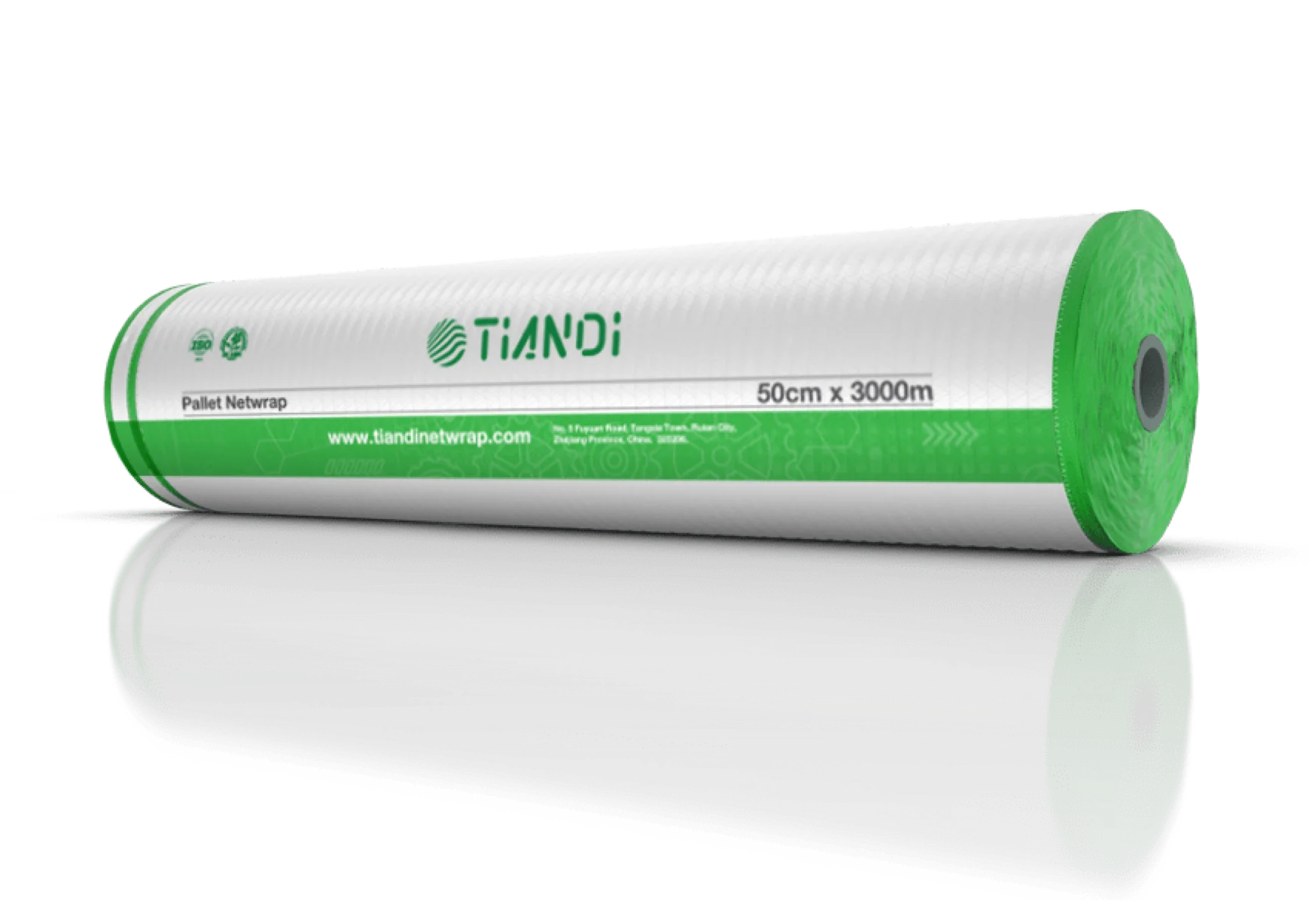
The supplier should be able to quote standard 50cm and 76cm widths as well as custom width, roll length, elasticity and packaging options. Tiandi's pallet netwrap range provides the standard starting point; a custom quotation should be based on the actual line and load rather than a generic catalogue match.
Compare total operating cost
Compare cost per secured pallet, not only cost per kilogram. Include the number of passes, material consumed, line time, roll changes, failed wraps and waste. A net with a higher unit price can still be the lower-cost option if it secures the load in fewer passes and reduces material use.
Ask for a sample approval process before the first production order. The approved sample should be tied to a written specification, and any later change to resin, mesh, winding or packaging should require notice. This simple control makes supplier comparisons meaningful when quotations arrive from different factories.
Send a complete enquiry
Include destination market, annual or trial volume, pallet dimensions, load type, machine model, current wrap specification, target width and roll length, packaging needs and required delivery window. Send these details to Tiandi for a product recommendation and supply discussion.