
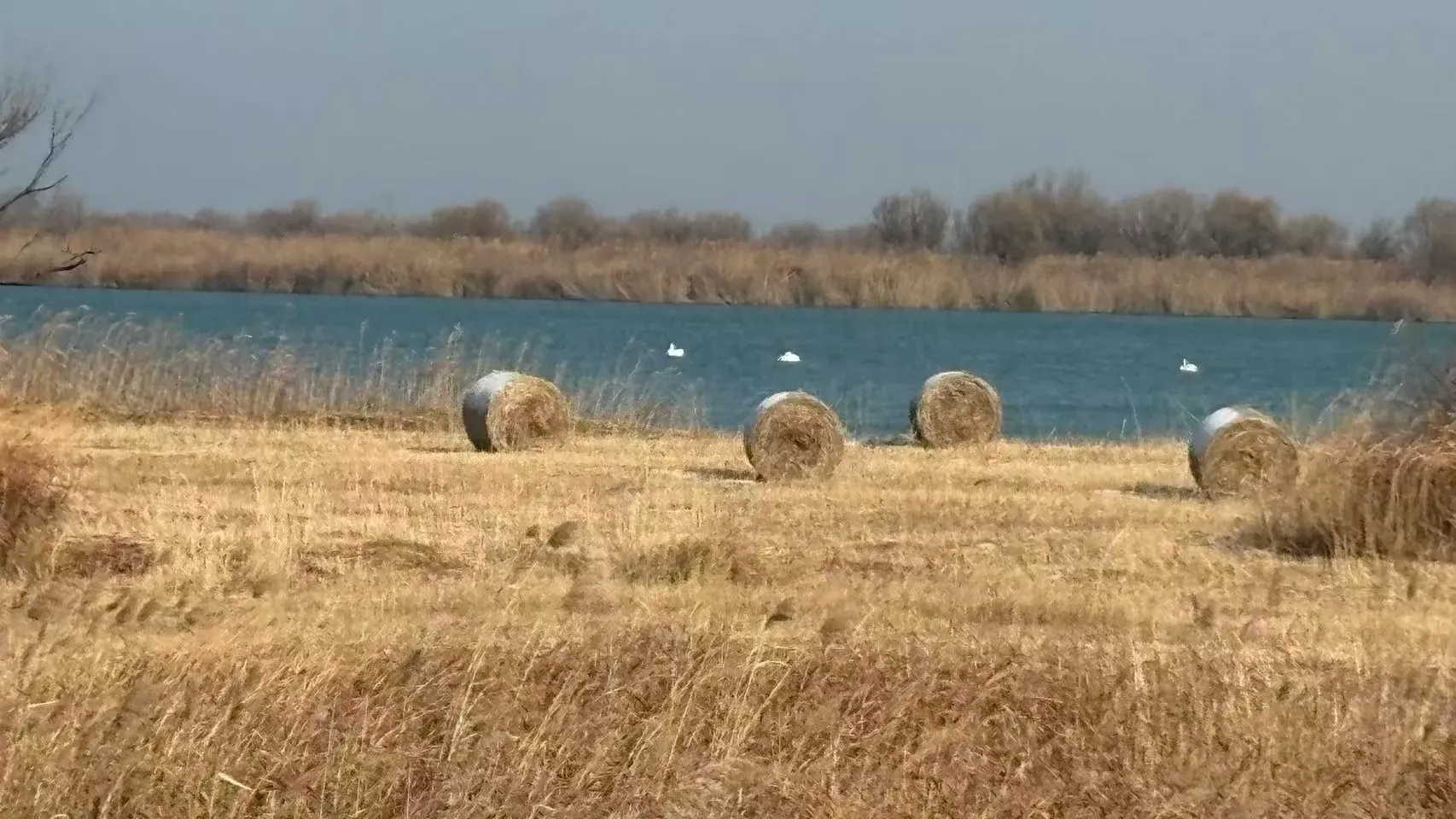
How Much Does a Round Bale of Hay Weigh?
How much does a round bale of hay weigh? Use bale size, crop, moisture, density and a scale check to plan safe handling, storage and net wrap.
October 2, 2026
The short answer to “how much does a round bale of hay weigh?” is: it depends on the bale, not just the label on the baler. Crop type, moisture, diameter, width, density and the way the bale was formed all change the result. A weight estimate is useful for planning, but a scale check is the dependable answer when you are arranging transport, stacking bales or choosing a net wrap grade.
How much does a round bale of hay weigh?
There is no universal number because “round bale” describes a shape, not a fixed mass. As a planning estimate, a dry 4x5 bale is often in the several-hundred-pound range, while a dense or damp bale of the same nominal size can be materially heavier. Use that range to plan equipment, never as a substitute for weighing a representative bale.
What determines round bale weight
The biggest variables are material density and bale volume. A dry grass bale, a leafy alfalfa bale and a damp silage bale can have very different weights at the same nominal size. Moisture adds weight directly, while density changes how much dry matter is packed into the chamber.
Diameter matters because a larger bale contains more volume. Width matters too: two bales with the same diameter but different chamber widths will not weigh the same. Bale shape is another clue. A firm, evenly formed bale is easier to compare with the next bale than one with soft shoulders or a loose core.
Why online bale-weight estimates vary
Online charts often use a size such as 4x5 or 5x6 as if it were a complete specification. It is not. The dimensions describe the approximate chamber output, while the crop, moisture and density setting determine how much material is inside.
Use published figures as a starting point only. If the number matters for a truck limit, loader capacity, storage floor or feed plan, weigh a representative bale from the same field and cutting. A small sample from a different crop or moisture condition can be misleading.
A practical way to estimate and verify weight
Start with three measurements: bale diameter, bale width and crop condition. Record whether the bale is dry hay, straw or silage, and note the density setting used on the baler. Then weigh several bales rather than relying on one unusually light or heavy bale.
For a quick farm estimate, weigh the transport unit before and after loading, then divide the difference by the number of bales. This gives a useful average for that field and harvest window. It is an operational estimate, not a laboratory measurement, but it is usually more relevant than a generic internet chart.
Keep the result with the field or cutting record. The same baler can produce a different average after a crop change, a moisture change or a density adjustment. That record helps the operator plan trailer loads and lets the buyer explain the net wrap specification with real operating conditions instead of a generic bale-size label.
What bale weight means for net wrap
Weight does not select the net by itself. The correct specification still starts with the baler's chamber width, core size, maximum roll diameter and feed path. Our baler compatibility check covers those six points before an order is placed.
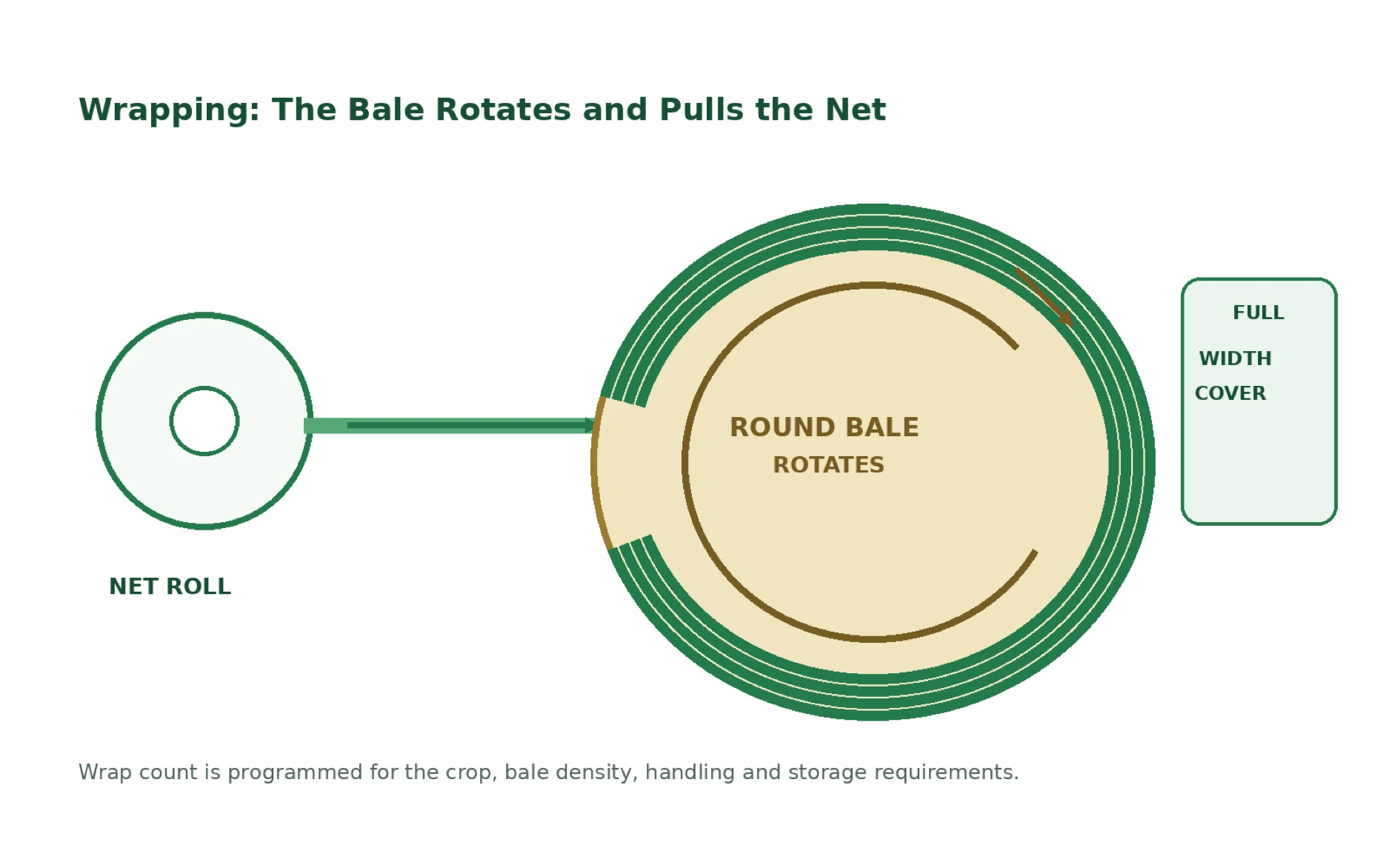
Heavier, denser or higher-moisture bales may justify a stronger grade or a more robust wrapping setup, especially when bales will be moved often or stored outdoors. The round-baler wrapping cycle guide explains how brake tension, spread and cutting affect the finished bale.
Choose net wrap around the machine and crop
Once the operating conditions are clear, compare the baler netwrap range by width, strength, UV requirement and roll format. If your fleet uses more than one chamber size, send the machine list, bale dimensions and target crop to the Tiandi service team so the specification can be checked before a wholesale or private-label order.
Frequently Asked Questions
- What is the average weight of a round bale of hay?
- There is no single average that fits every farm. Crop, moisture, bale diameter, bale width, density and the baler's settings can move the result substantially. Treat any online number as a planning estimate and use a scale or a verified local bale sample for transport and storage decisions.
- Does a 4x5 bale weigh more than a 4x4 bale?
- Usually, yes, if both bales have similar density and moisture, because the larger bale contains more material. The actual difference depends on the bale chamber, crop and density setting, so size alone is not a substitute for weighing a sample.
- Does bale weight affect net wrap selection?
- It can. Heavier or denser bales place more load on the net during wrapping, handling and storage. Match the net width, roll format and strength grade to the baler and crop, then confirm the machine fit before ordering.